Fight Back! News

News and Views from the People's Struggle

Socialism

By Anthony O'Hegarty

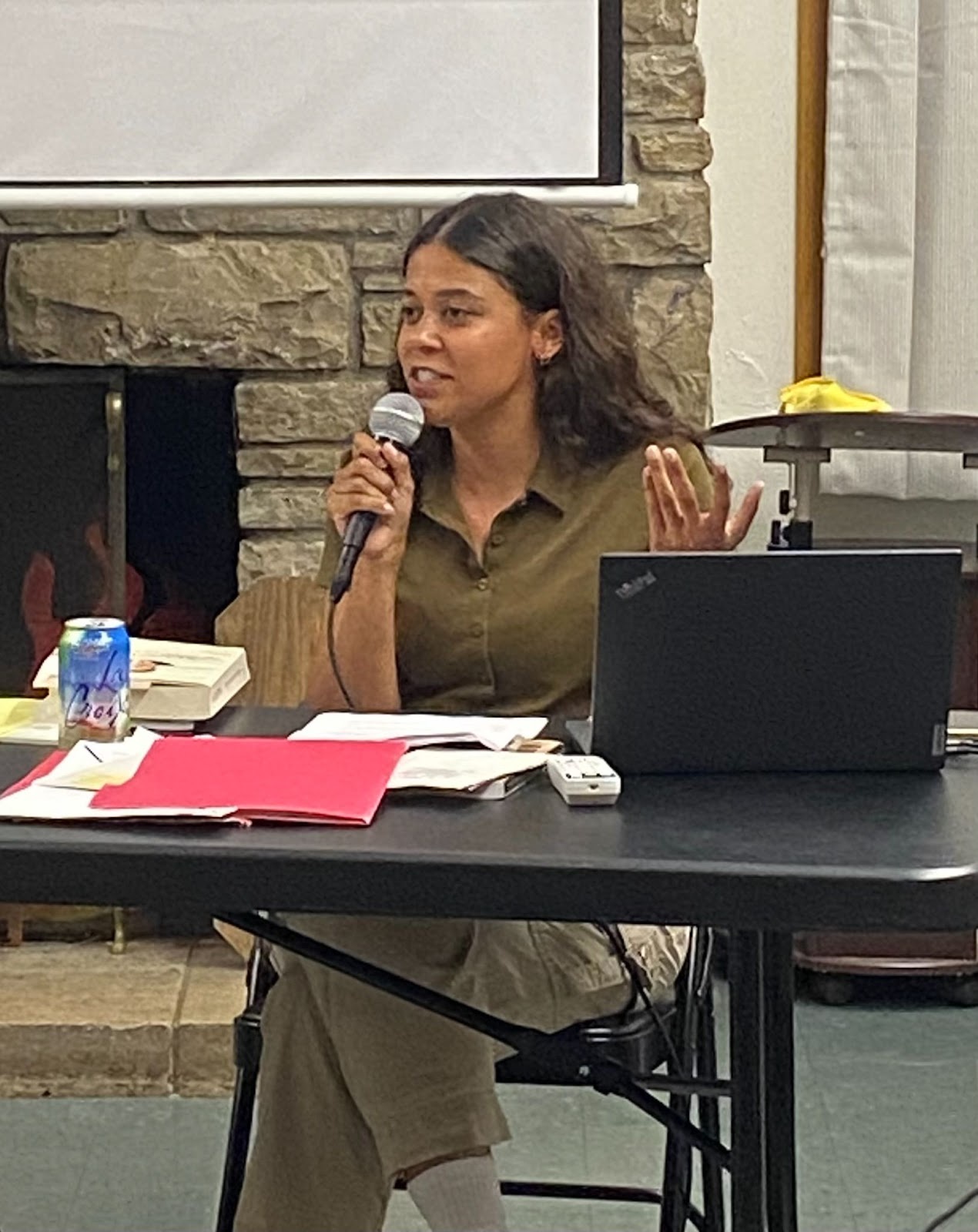
Syd Loving of the FRSO Central Committee speaking tour event on socialism in China. | Fight Back! News

Grand Rapids, MI – Spirits were high as Syd Loving, a member of the Central Committee of the Freedom Road Socialist Organization, spoke at two events in the Grand Rapids area on Monday, November 11. Loving had spent ten days during the summer in China as a part of the Friends of Socialist China delegation there – learning about Chinese history, the role of the Communist Party of China (CPC) in daily life and governance, and the technological advances the largest socialist country has made.

Read more...

By Justin Jordan

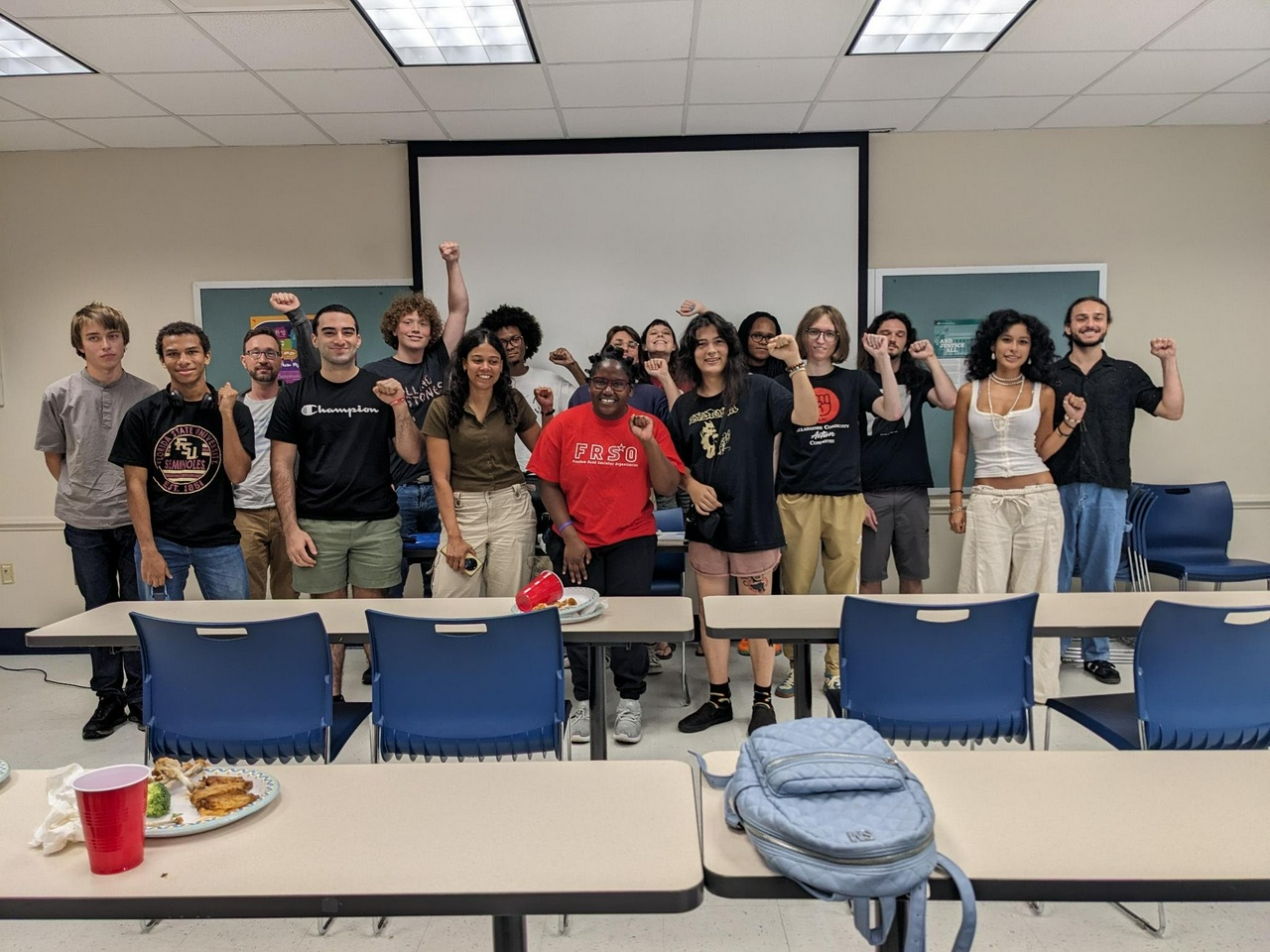
Tallahassee, Florida FRSO event on socialism in China.

Tallahassee, FL – As a part of the national tour, Sydney Loving, a member of the central committee of the Freedom Road Socialist Organization (FRSO), spoke to a Tallahassee event after her recent visit to socialist China. Loving traveled to China as a member of a delegation organized by the Friends of Socialist China.

Read more...

By J. Sykes

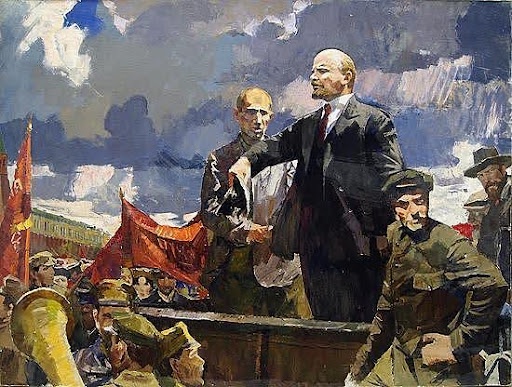
The revolutionary struggle that brought about the first socialist state in the former Russian Empire in 1917 had its first major upheavals years earlier. The Russian Social Democratic Labor Party (RSDLP) had split into two factions, the Bolsheviks (meaning majority, led by V.I. Lenin) and Mensheviks (meaning minority, led by Julius Martov) in 1903. The RSDLP remained as one party formally, but the two factions, practically, had separate centers, presses, and programs. As The History of the Communist Party of the Soviet Union (Bolsheviks) – Short Course puts it, “on the eve of the first Russian revolution, when the Russo-Japanese war had already begun, the Bolsheviks and the Mensheviks acted as two separate political groups.”

The Russo-Japanese war broke out in 1904, and the Bolsheviks and Mensheviks each took a different stance toward the war. “The Mensheviks, including Trotsky, were sinking to a position of defending the ‘fatherland’ of the tsar, the landlords and the capitalists,” says the Short Course. “The Bolsheviks, headed by Lenin, on the other hand, held that the defeat of the tsarist government in this predatory war would be useful, as it would weaken tsardom and strengthen the revolution.”

By 1905 the struggle came to a head. The Short Course sums it up like this: 

“The workers' recourse to mass political strikes and demonstrations, the growth of the peasant movement, the armed clashes between the people and the police and troops, and, finally, the revolt in the Black Sea Fleet, all went to show that conditions were ripening for an armed uprising of the people. This stirred the liberal bourgeoisie into action. Fearing the revolution, and at the same time frightening the tsar with the spectre of revolution, it sought to come to terms with the tsar against the revolution; it demanded slight reforms ‘for the people’ so as to ‘pacify’ the people, to split the forces of the revolution and thus avert the ‘horrors of revolution.’ ‘Better part with some of our land than part with our heads,’ said the liberal landlords. The liberal bourgeoisie was preparing to share power with the tsar.’

In this time of great upheaval, the RSDLP lacked unity over tactics on how to move forward. The Bolsheviks called the Third Congress in order to assess the situation and formulate tactics that the whole party would be bound to carry out. But the Mensheviks boycotted the Third Congress and called their own “conference” in order to formulate their own tactical line apart from the Bolsheviks. 

The Third Party Congress correctly assessed that the liberal bourgeoisie didn’t want complete victory for the revolution but would instead seek compromise with the tsar on the basis of forming a constitutional monarchy. Therefore, it called for the proletariat to lead the bourgeois-democratic revolution, allied closely with the peasantry, since those were the class forces fundamentally interested in complete victory. The Menshevik conference, on the other hand, insisted that the democratic revolution be led by the liberal bourgeoisie, and that revolutionary socialists should make every effort to avoid frightening the liberal bourgeoisie and thereby undermining the revolution. The Bolsheviks advocated the revolutionary overthrow of tsarism, and the continuation of the revolution from its bourgeois-democratic stage to its socialist stage, while the Mensheviks instead advocated a policy of compromise and reform. 

Lenin’s arguments

Lenin’s book, Two Tactics of Social Democracy in the Democratic Revolution appeared two months after the Third Congress, in July 1905. It explained and developed the Bolshevik tactical line as it exposed and criticized the Menshevik tactical line. 

There are three main points in Lenin’s book that must be emphasized. 

First, Lenin argued that the proletariat must be the leader and guiding force of the bourgeois-democratic revolution. Thus, in Two Tactics Lenin writes, 

“Marxism teaches the proletarian not to keep aloof from the bourgeois revolution, not to be indifferent to it, not to allow the leadership of the revolution to be assumed by the bourgeoisie but, on the contrary, to take a most energetic part in it, to fight most resolutely for consistent proletarian democracy, for carrying the revolution to its conclusion. We cannot jump out of the bourgeois-democratic boundaries of the Russian revolution, but we can vastly extend these boundaries, and within these boundaries we can and must fight for the interests of the proletariat, for its immediate needs and for the conditions that will make it possible to prepare its forces for the future complete victory.”

For this reason, Lenin writes, “The outcome of the revolution depends on whether the working class will play the part of a subsidiary to the bourgeoisie, a subsidiary that is powerful in the force of its onslaught against the autocracy but impotent politically, or whether it will play the part of leader of the people’s revolution.” To do this, Lenin held that it was necessary for the proletariat to ally itself with the peasantry, on the one hand, and, on the other hand, to isolate the liberal bourgeoisie and force it out of leadership of the revolution. 

Second, Lenin argued that the means for overthrowing tsarism and achieving a democratic republic was through revolutionary armed struggle. 

In Two Tactics Lenin writes, “In order to be able to exercise this pressure from below, the proletariat must be armed—for in a revolutionary situation matters develop with exceptional rapidity to the stage of open civil war – and must be led by the Social-Democratic Party. The object of its armed pressure is that of ‘defending, consolidating and extending the gains of the revolution,’ i.e., those gains which from the standpoint of the interests of the proletariat must consist in the fulfilment of the whole of our minimum program.”

Against the Mensheviks, who advocated for reform during a revolutionary situation, Lenin wrote, “under the circumstances … amendments are moved by means of street demonstrations, interpolations are introduced by means of offensive action by armed citizens, opposition to the government is effected by forcibly overthrowing the government.” 

Third, Lenin argued that the revolution should have two stages, and that the revolution must not come to a halt with the victory of the bourgeois-democratic stage. Instead, it must strive immediately to pass into the socialist stage.

Therefore, Lenin writes in Two Tactics, “The proletariat must accomplish the socialist revolution, by allying to itself the mass of the semi-proletarian elements of the population in order to crush by force the resistance of the bourgeoisie and to paralyze the instability of the peasantry and the petty bourgeoisie.”

The Short Course points out, “This was a new theory which held that the Socialist revolution would be accomplished not by the proletariat in isolation as against the whole bourgeoisie, but by the proletariat as the leading class which would have as allies the semi-proletarian elements of the population, the ‘toiling and exploited millions.’” It goes on to explain, “According to this theory the hegemony of the proletariat in the bourgeois revolution, the proletariat being in alliance with the peasantry, would grow into the hegemony of the proletariat in the Socialist revolution, the proletariat now being in alliance with the other laboring and exploited masses, while the democratic dictatorship of the proletariat and the peasantry would prepare the ground for the Socialist dictatorship of the proletariat.”

The hegemony of the proletariat in the bourgeois-democratic revolution, the necessity of revolutionary armed struggle, and the importance of carrying the revolution forward from the democratic to the socialist stage: these are the most important lessons to draw from Lenin’s Two Tactics

Two Tactics today

After 1905, the democratic revolution in Russia entered a period of retreat, and wouldn’t be completed until February of 1917, after which the Bolsheviks did indeed push the revolution forward to the victorious October socialist revolution. 

Regarding Lenin’s book, Two Tactics, the Short Course says, “Its invaluable significance consists in that it enriched Marxism with a new theory of revolution and laid the foundation for the revolutionary tactics of the Bolshevik Party with the help of which in 1917 the proletariat of our country achieved the victory over capitalism.”

It is important that revolutionaries study this cornerstone of Marxist-Leninist theory today. Indeed, it explains in clear terms how revolutionaries should relate to the movements for democracy and the other class forces involved in those movements. It lays out the basic principles at the core of Leninist tactics. The lessons of Two Tactics apply to our own struggle in the U.S., where different class forces are united in struggle against monopoly capitalism. At the core of this united front is the strategic alliance of the multinational working class on the one hand and the movements of the oppressed nations and nationalities for liberation on the other hand. Lenin’s Two Tactics explains clearly the importance of the leadership of the proletariat and its need for allies. And while we must push forward and develop the struggle to defend and expand democracy in a revolutionary way, we must advance to the overthrow of the capitalist system and struggle for socialism.

#RevolutionaryTheory #Socialism #MarxismLeninism #MLTheory #RedTheory

By staff

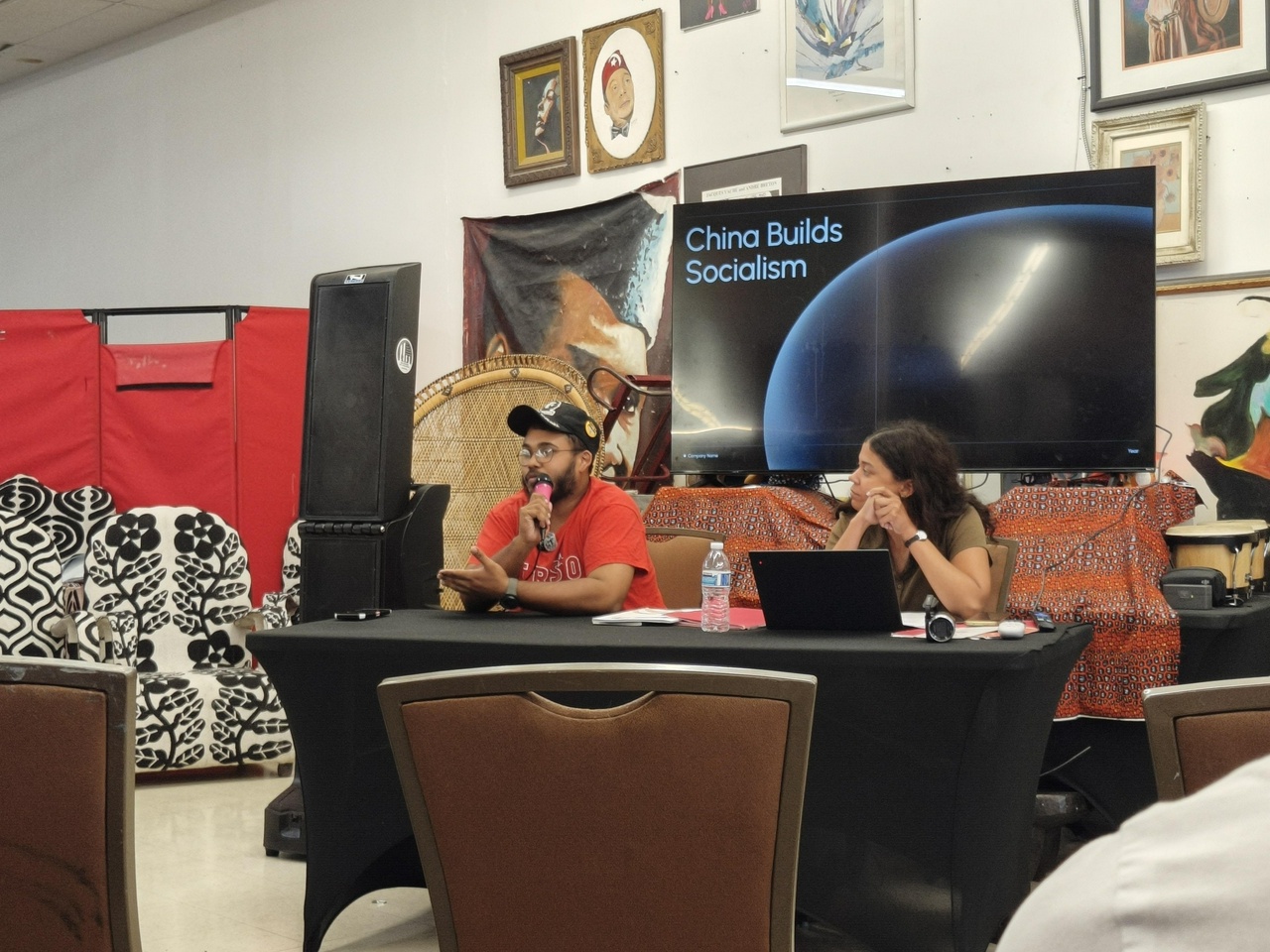
Two panelists sit at a table wearing FRSO shirts and giving talks on socialist construction in China.

Dallas, TX – On Saturday, August 30, more than 30 Dallas residents gathered at Pan African Connection Bookstore and Resource Center for discussion on socialism as it pertains to the modern People's Republic of China.

Hosted by the Freedom Road Socialist Organization, (FRSO), the event was part of a speaking tour led by Sydney Loving, a Central Committee member of FRSO, who spent ten days in China as part of a delegation of Friends of Socialist China.

Loving began the presentation by stating, “75 years of socialist construction. We saw a country that has the largest economy in the world as measured by Purchasing Power Parity, which is a more accurate view than GDP, or Gross Domestic Product, which relies on the stock market and inflates the real economy. China's economy is the largest by industrial manufacturing. Even smaller cities are high-tech and increasingly green, life expectancy is over 78 years which is two years longer than the U.S., and of course where over 800 million people have been lifted out of extreme poverty.”

Loving continued, “Thanks to China's socialism they are completing an industrial revolution every decade since the 1980s. China is in the forefront of this new industrial revolution with AI, quantum technology, big data etc. China and the world have changed forever. But despite these advancements China remains controversial in the West, even amongst the left! Believe it or not. So, it's important to seek truth from fact as Mao says.”

Loving expounded on the particular advancements from the five cities she visited, Xi’an, Yan’an, Dunhuang, Jiayu guan and Shanghai.

Loving stated, “We went to Yan’an, which was really the cradle of the revolution from 1935 to 1947. The Red Army re-grouped there after the Long March, and the CPC [Communist Party of China] held the 7th National Congress there, 16 long years after the 6th Congress, because they were fighting Japanese imperialism and the KMT. [Yan’an is] where Mao Zedong Thought was crystalized and adopted. They fought dogmatism and made the decision to be the party of the masses of Chinese people.”

“In Jiayu guan, we visited JISCO, a state-owned steel company that the workers built the whole city around in the 1950s. Today it has 42% green cover, with ponds and parks– remember this is the Gobi Desert, “ said Loving.

“In Shanghai we went to a robotics facility where they demonstrated the advancements for surgery and industry, and a Lenovo factory where they showed off how they’re partnering with the school system to bring advanced tech into rural classrooms,” said Loving.

Loving concluded her presentation by saying, “China is not a utopia, it's a real place. Everything that we saw affirmed that China is continuing to build socialism that centers the people. China is building a future for all of us that is more peaceful and more equal.”

#DallasTX #TX #International #RevolutionaryTheory #China #Socialism

By staff

La delegación en Yan’an afuera del salón dónde se realizó el 7mo Congreso del Partido Comunista de China.  | Foto: Noticiero ¡Lucha y Resiste!

Noticiero ¡Lucha y Resiste! se sentó con Sydney Loving, participante de la delegación de Amigos de China Socialista, que recientemente regresó de una visita de diez días a cinco ciudades en China. De bases revolucionarios a ciudades de alta tecnología y desarrollo verde, la delegación presenció de primera mano el poder del socialismo a levantar las vidas de la gente. Loving es miembro del Comité Central de la Organización Socialista Camino de la Libertad.

Leer más...

By Peter Kellner

Sydney Loving.

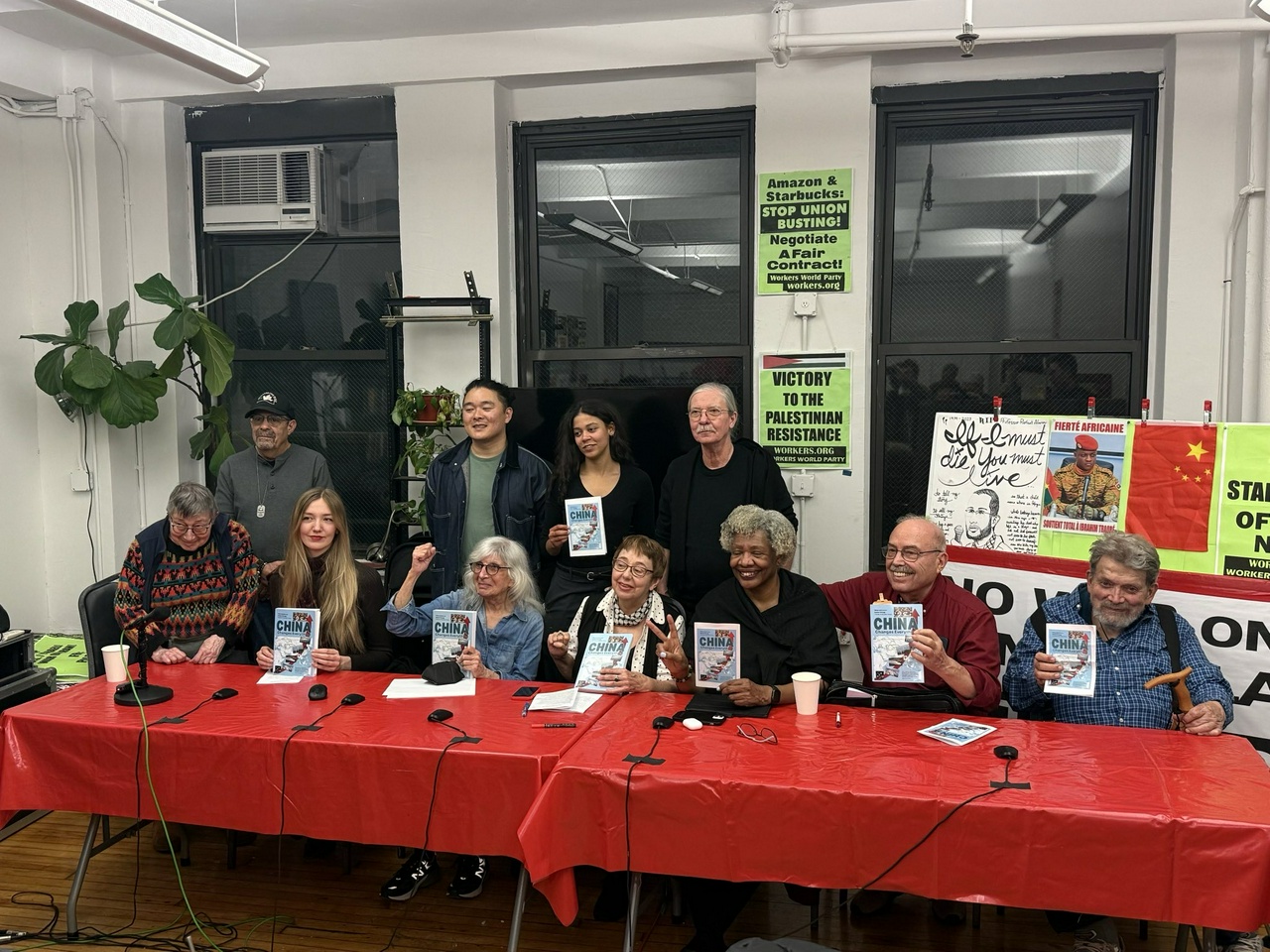
Minneapolis, MN – On Friday, August 15, more than 50 Twin Cites residents gathered at Lucy Parsons Center for the event “China: A Contrasting Vision for the World,” hosted by Women Against Military Madness (WAMM) talking about China and constructing a socialist society.

Read more...

By staff

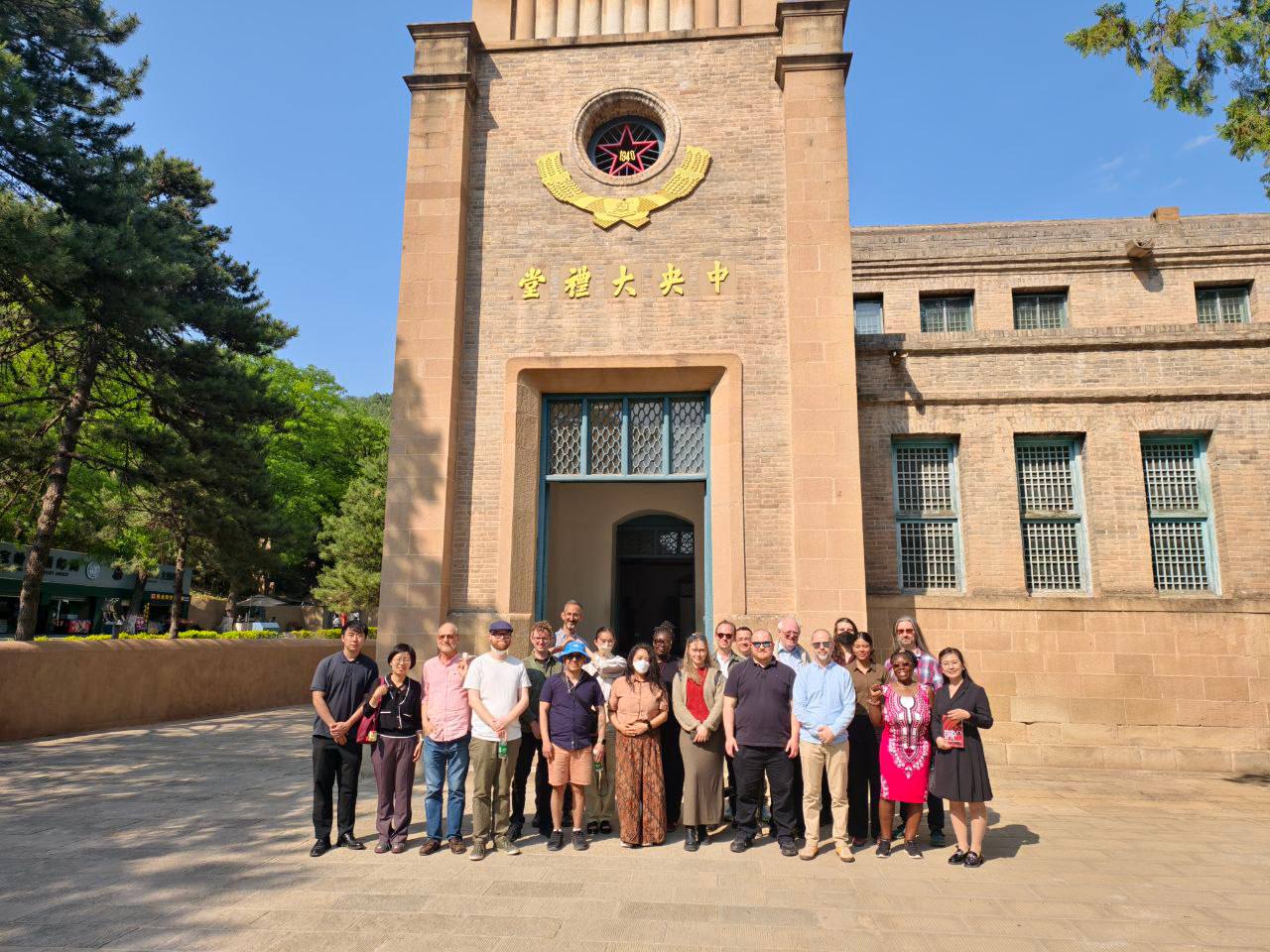
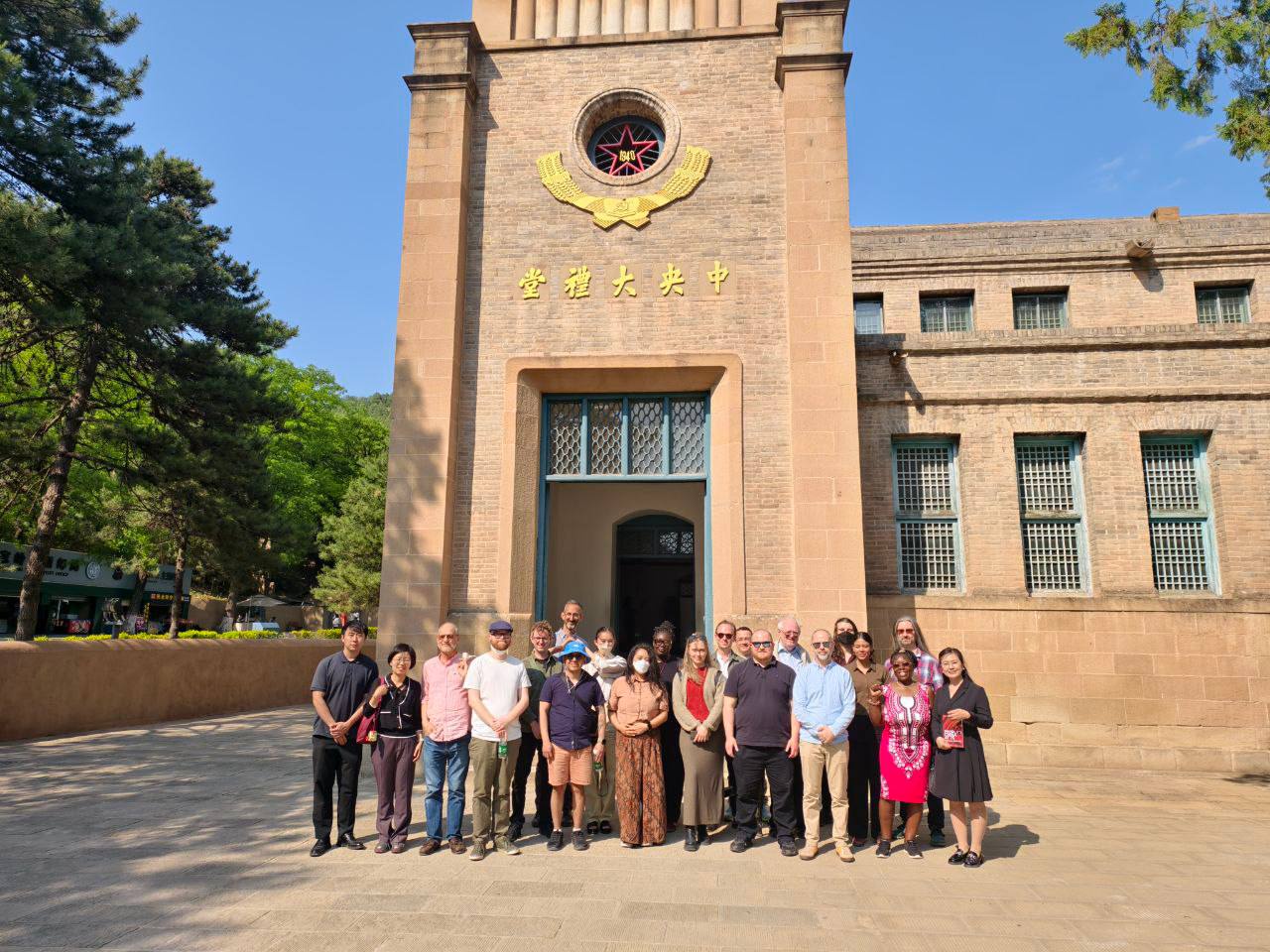
A group of people standing in front of a meeting hall with Chinese characters over the entrance.

Fight Back! sat down with Sydney Loving, a participant in the 2025 Friends of Socialist China delegation, which recently returned from a ten-day visit across five cities in China. From revolutionary bases to high-tech cities and green development, the delegation witnessed firsthand the power of socialism to uplift the lives of the people. Loving is a member of the Central Committee of Freedom Road Socialist Organization.

Fight Back!: How did you go to China? What was the purpose of the trip?

Sydney Loving: The delegation was organized by Friends of Socialist China, a political project aiming to strengthen understanding and support for China on the basis of solidarity and truth. I repped Freedom Road Socialist Organization, and the delegation included folks from Black Alliance for Peace, Workers World, Progressive International, Communist Party of Britain Young Communist League, Black Liberation Alliance, Qiao Collective, Iskra Books, and others.

Read more...

By Brad Sigal

Amilcar Cabral.

“One of the most lucid and brilliant leaders in Africa, Comrade Amílcar Cabral instilled in us tremendous confidence in the future and the success of his struggle for liberation.” — Fidel Castro

September 12, 2024 marks the 100th anniversary of the birth of one of the giants of 20th century African liberation struggle and global anti-imperialist movement, Amilcar Cabral.

Progressive and revolutionary people should take this occasion to celebrate the proud revolutionary legacy of Amilcar Cabral, the national liberation movement he led in Guinea Bissau and Cape Verde, and the worldwide anti-imperialist movement he was part of.

Read more...

By Freedom Road Socialist Organization

The Freedom Road Socialist Organization calls on working and oppressed peoples to celebrate May 1st, International Workers Day.

On this May Day, we will show that the revolutionary spirit of the working class is alive and well in 2024. Unions are waging fierce battles and reviving the strike. Chicanos and Latinos are mobilizing and steeling themselves against escalated militarization at the U.S.-Mexico border. The people of Palestine are shaking off the chains of U.S. imperialism and leading a heroic resistance that will set their people free. Revolution is in the air, and the masses of workers and oppressed peoples are on the move.

Read more...

By staff

Freedom Road Socialist organization will be hosting an online meeting with Carlos Martinez, author of The East is Still Red: Chinese Socialism in the 21st Century on Sunday, October 29, 3 p.m. Central time (1 p.m. Pacific, 2 p.m. Mountain, 4 p.m. Eastern).

Read more...

By the Standing Committee, FRSO

FRSO launches two new Nationalities Commissions.

The Freedom Road Socialist Organization (FRSO) took another major step forward with the launching of an African American Commission and a Chicano/Latino plus other oppressed nationalities commission. Comrades from more than a dozen cities where the FRSO does organizing among African Americans, Chicanos, and other oppressed nationalities gathered to carry out a decision by the 9th Congress to establish these commissions.

Read more...

By staff

Enter a descriptive sentence about the photo here.

Minneapolis, MN – The Freedom Road Socialist Organization Fund Drive has now surpassed $70,000 and more money is coming in every day.

Read more...

By staff

Orlando, FL – On July 3, the Orlando District of Freedom Road Socialist Organization (FRSO) held a Political Program release discussion at a meeting attended by over 30 people representing other progressive forces in the area.

Read more...

By staff

Frank Chapman of the Central Committee of Freedom Road Socialist Organization

Minneapolis, MN – More than $26,000 was pledged at the May 25 Freedom Road Socialist Organization (FRSO) online fundraising event. The event featured Frank Chapman of the FRSO central committee member and executive director of National Alliance Against Racist and Political Repression, FRSO Standing Committee Member Fern Figueroa, and the FRSO Labor Commission Chair Cherrene Horazuk.

Read more...

By Organización Socialista Camino de la Libertad

Programa Político de la OSCL ahora disponible en español

El libro traducido al español del programa político de la Organización Socialista Camino de la Libertad ya está disponible. Esperamos que esta nueva traducción ayude a traer ideas revolucionarias a una mayor audiencia, incluyendo al movimiento de la liberación Chicano y el movimiento para los derechos inmigratorios.

Leer más...

By Freedom Road Socialist Organization

Enter a descriptive sentence about the photo here.

The Spanish translation of the political program of Freedom Road Socialist Organization is now available as a paperback book. We hope that this new translation will help to bring revolutionary ideas to a wider audience, including the Chicano liberation and immigrant rights movement.

Read more...

By staff

Ho Chi Minh with Mao Ze Dong

To mark the birthday of the outstanding Vietnamese communist Ho Chi Minh, Fight Back News Service is circulating has 1960 article “The Path Which Led Me To Leninism.” The Path Which Led Me To Leninism

Read more...

By staff

FRSO Fundraiser May 25

Minneapolis, MN – A major online fundraising event featuring Frank Chapman – of the FRSO Central Committee and Executive Director of National Alliance Against Racist and Political Repression – will take place on the evening of May 25. The event, which will also feature Labor Commission Chair Cherrene Horazuk and Standing Committee member Fern Figueroa is part of the $130,000 fund drive that will help FRSO expand its national office and put more full-time organizers in the field.

Read more...

By staff

FRSO Spring Fundraiser passes the $35,000 mark.

Minneapolis, MN – The Freedom Road Socialist Organization Spring Fund Drive hit the $35,000 mark May 11, with more money coming in daily. The fund drive aims at raising $130,000, allowing for an expansion of our national office, more publications and putting more full-time organizers in the field.

Read more...

By staff

Olivia Crull, of Freedom Road Socialist Organization.

Minneapolis, MN – On Saturday, April 29, over 100 activists from mass movements around the Twin Cities area came together at the office of the Minneapolis Federation of Teachers and Education Support Professionals Local 59 to celebrate International Workers Day, and another year in struggle across the movements in the streets, and the movement for socialism. The location was fitting for such an event because the Teachers and Educators in Minneapolis Public Schools spent more than three weeks on strike only one year ago. The room was packed and boisterous. The speeches were lively. The night closed with a performance of The Internationale, which started with a cello and violin duo, then the entire crowd joining in for the singing of the historic song.

Read more...