
Commentary: The historical significance of the Latino Cultural Center’s 50th anniversary
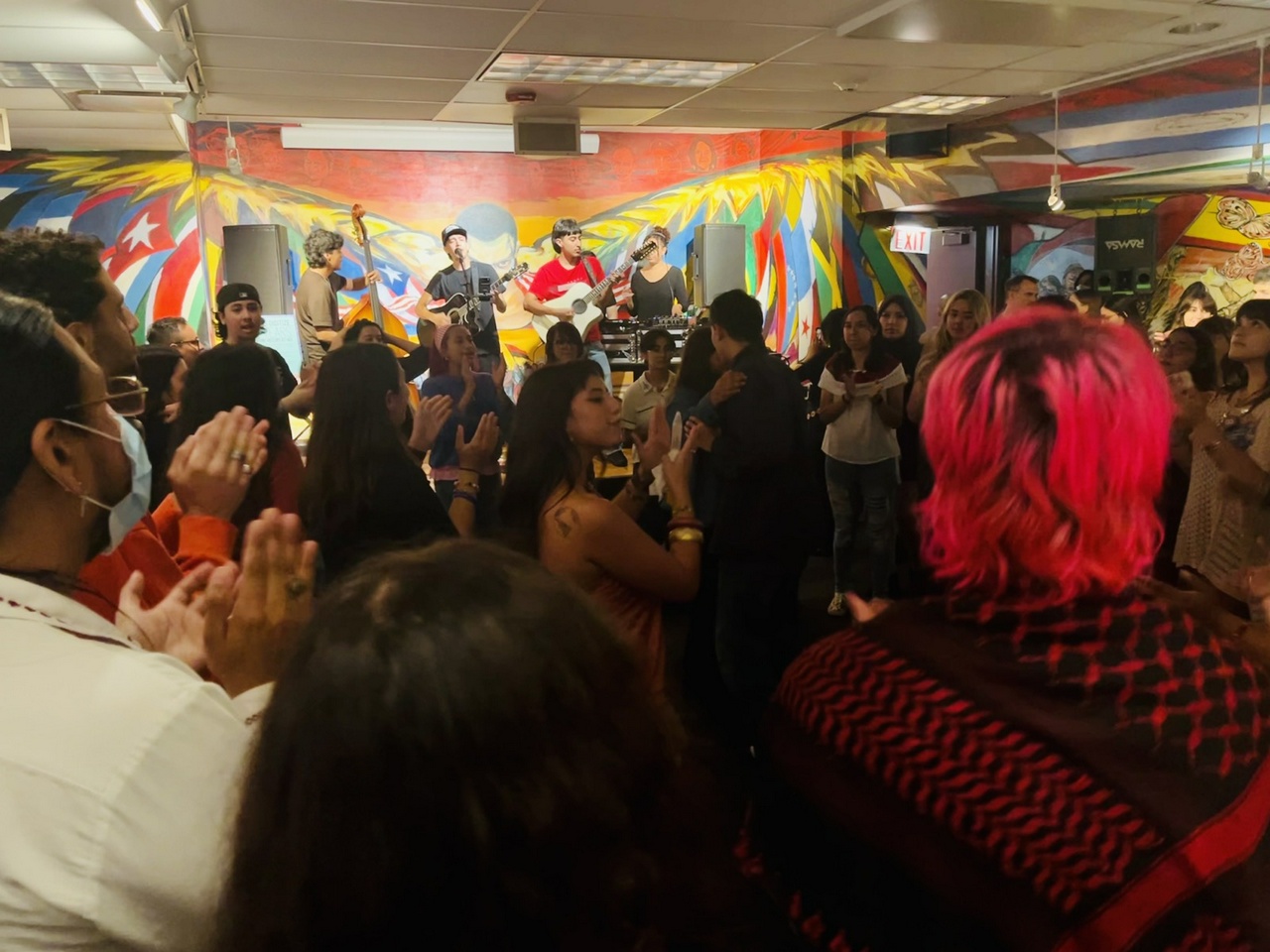
Chicago, IL – On Wednesday, September 23, hundreds of people gathered at the Rafael Cintrón Ortiz Latino Cultural Center (LCC) at the University of Illinois at Chicago to commemorate the 50th anniversary of the cultural center. Founded on September 19, 1976, the LCC was the first cultural center at UIC and was named after a Puerto Rican professor, Rafael Cintrón Ortiz, who supported the just struggles of the student activists in the 1970s.
Just a few hours before the event began, Mexican Students de Aztlán (MeSA) led hundreds of students in successfully preventing the U.S. Customs and Border Patrol from attending a career fair hosted by UIC. Student activists, university faculty and staff, and community members filled the LCC. People socialized and shared food, listened to speeches from professors, alumni and cultural center staff, and ended the night by dancing to music by Chicago DJ duo TRQPiTECA and local student band Grupo Tercero. Months of work by cultural center staff, student interns and countless others made this lively celebration possible. Attendees remarked how emotional and empowered the event made them feel, and rightfully so.
Donald Trump’s racist and reactionary administration has come down hard on diversity, equity and inclusion (DEI) in higher education. At many universities across the country, cultural centers have been downright closed or “consolidated,” that is, effectively shut down. To make matters worse, these decisions are often made by racist campus administrators without any warning to the staff and interns at said cultural centers, leaving them jobless. Such is the situation at Louisiana State University, for instance. But it would be a mistake to believe that these attacks on DEI are limited to places like the Black Belt South or Aztlán, where the national liberation struggles of the African-American and Chicano peoples for self-determination are respectively rooted.
In the Midwest, and in Black and brown working-class cities like Chicago, there have also been attacks on DEI. At universities like UIC, there is a long history of struggles for full equality for oppressed nationalities. The oppressed students and youth here have waged historic fights for recruitment programs, ethnic studies departments and cultural centers. And to this day, the struggle for full equality rages on. Student activist groups such as New Students for a Democratic Society at UIC have been waging a struggle to defend and increase funding for the cultural centers on campus, successfully reversing a budget cut proposed by the university administration in 2025.
Jorge Mena Robles, a former student activist with the Immigrant Youth Justice League at UIC and current associate director of the LCC, took the stage. Mena Robles introduced the keynote speaker for the nighttime celebration, Dr. Lilia Fernandez.
Dr. Fernandez is a professor and director of Graduate Studies at UIC in the Department of History. She is a historian of the 20th-century United States and author of the seminal work Brown in the Windy City: Mexicans and Puerto Ricans in Postwar Chicago, and perhaps the best professor I’ve ever had at UIC. For this reason, I have received her permission to quote her at length in an attempt to highlight what I believe are some of the most important points that she raised during her keynote speech, which I believe highlight the historical significance of the LCC’s 50th anniversary.
“I'd like to start by acknowledging the many student activists who were here in the early 1970s, especially in 1973, who protested, occupied university hall, made demands for greater access to this university, and otherwise registered their dissent over how this institution explicitly excluded Mexican-Americans, Puerto Ricans and other students of color. They acted with courage and commitment at great risk to their personal well-being and their educational careers, and it's because of them that we are here today,” said Dr. Fernandez.
Fernandez continued, “Let me provide some further historical context about when the RCOLCC was first opened in 1976. The year before, the United States had finally abandoned the Vietnam War, after it had claimed the lives of so many of our community's young men. The Sears Tower, and in my book it will always be The Sears Tower, was shining anew, having only been built just three years prior. And to bring this closer to home, to make this more personal, I was just a preschooler at El Hogar Del Niño Daycare Center in Pilsen, for any of you who know it. A culturally conscious community institution that provided childcare for the neighborhood's working mothers. El Hogar Del Niño, just like El Centro De La Causa, Casa Aztlán, the Puerto Rican Cultural Center, the Segundo Ruiz Belvis Cultural Center, this cultural center, and so much else that we've enjoyed in our communities for decades, was the fruit of so much activist labor.”
Fernandez highlighted how much the university has changed in the past 50 years: “UIC was a very different place 50 years ago. Latino students were very few in number. They found themselves in a sea of predominantly white students, many of whom we should note, traced their own roots to working-class and immigrant families. But few of those white classmates came from the same neighborhoods or high schools, or shared the same cultural practices or traditions as Latino students. Back then, Latinos could experience outright hostility and antagonism for their mere presence here at Circle, as it was known. Not only from academics, who argued that minority students were intellectually inferior, but from others who thought that Latinos did not deserve access to higher education. A lot has changed in the past 50 years. Today, whether the university celebrates it or not, UIC is a Hispanic-Serving Institution, a federally designated Hispanic-Serving Institution.”
In reviewing UIC’s latest demographic statistics, Dr. Fernandez reminded Latino students of the power they hold at the university. She said, “In fall 2025, Latinos made up 36% of all UIC undergraduates, 42% of all incoming first-years, and 30% of all students in undergraduate, graduate and professional programs combined. Think about how far we've come in the last 50 years. Fifty years ago Latinos were less than 2% of students here. Today they are the largest ethnic group in this richly diverse, multi-racial community. And unlike days past, where the cultural center was the only refuge where Latino students might find one another, besides a dining hall table I've heard of in the student center back in the day. Today Latino students are visible everywhere on this campus. In fact, this university depends on Latino students. If all of them suddenly decided collectively to withdraw their tuition payments, their financial aid checks, their course registrations… If that were to happen, this university would face a major crisis.”
Dr. Fernandez also explained that many students and youth are dealing with intense “individualism, alienation, and isolation” and that cultural centers such as the LCC can help provide an antidote to these ills and serve as places “to build community, to come together, to learn from one another, face-to-face.” She reflected on the challenging times that we live in under Trump’s racist and reactionary administration, the need to oppose U.S. wars in Asia, Africa and the Americas, and the extreme wealth inequality in this country brought on by the accelerated decline of monopoly capitalism, referring to the times we live in as “The Gilded Age on steroids.”
Then, Dr. Fernandez posed important questions about the historical and contemporary visibility of Latinos in U.S. society. She said, “When people think about our contributions to this country, to this city, we are often celebrated for our arts and culture. That is wonderful. But I want to urge us to think about our culture critically. We're recognized for our colorful fiestas, our celebrations, and there's nothing inherently wrong with being artists or cultural workers. But what I see problematic is when we are reduced and restricted to only those roles. When we are seen strictly through that lens, as festive, happy people, performers, or entertainers, for an audience, perhaps. Then, I think we have a problem. Pigeonholing us in that way diminishes our whole humanity. What about our social, political, and economic contributions? For the enduring campaigns we've fought? For the blood, sweat, and tears we have shed?”
Finally, Dr. Fernandez ended her speech by speaking directly to the youth in attendance and saying, “I'm passionate about lifting up and highlighting our many forms of labor to claim our rightful place in this society, and I'm going to use my authority here as a professor right now to give you all some homework, students in particular, a challenge, perhaps.”
“Whenever you come to campus, I want you to ask yourselves: What are we doing here to advance justice? To bring about meaningful social-political change? To promote collective freedom? I encourage you to think about the LCC as a site of historical struggle, and a place to build on the legacy of those students and community members who fought for us to be able to enjoy it today. So I leave you with these two last questions: What will our legacy be? And how will we be remembered in 50 years? Thank you.”
Ángel Naranjos is a fourth-year student at UIC, a Latin American and Latino Studies major, and a leader of MeSA’s Education, Resistance, and Activism Committee.
#ChicagoIL #IL #OppressedNationalities #Commentary #Chicano #Latino #ImmigrantRights #ICE #UIC