
Commentary: 2025 should be a reckoning for flight attendants’ safety
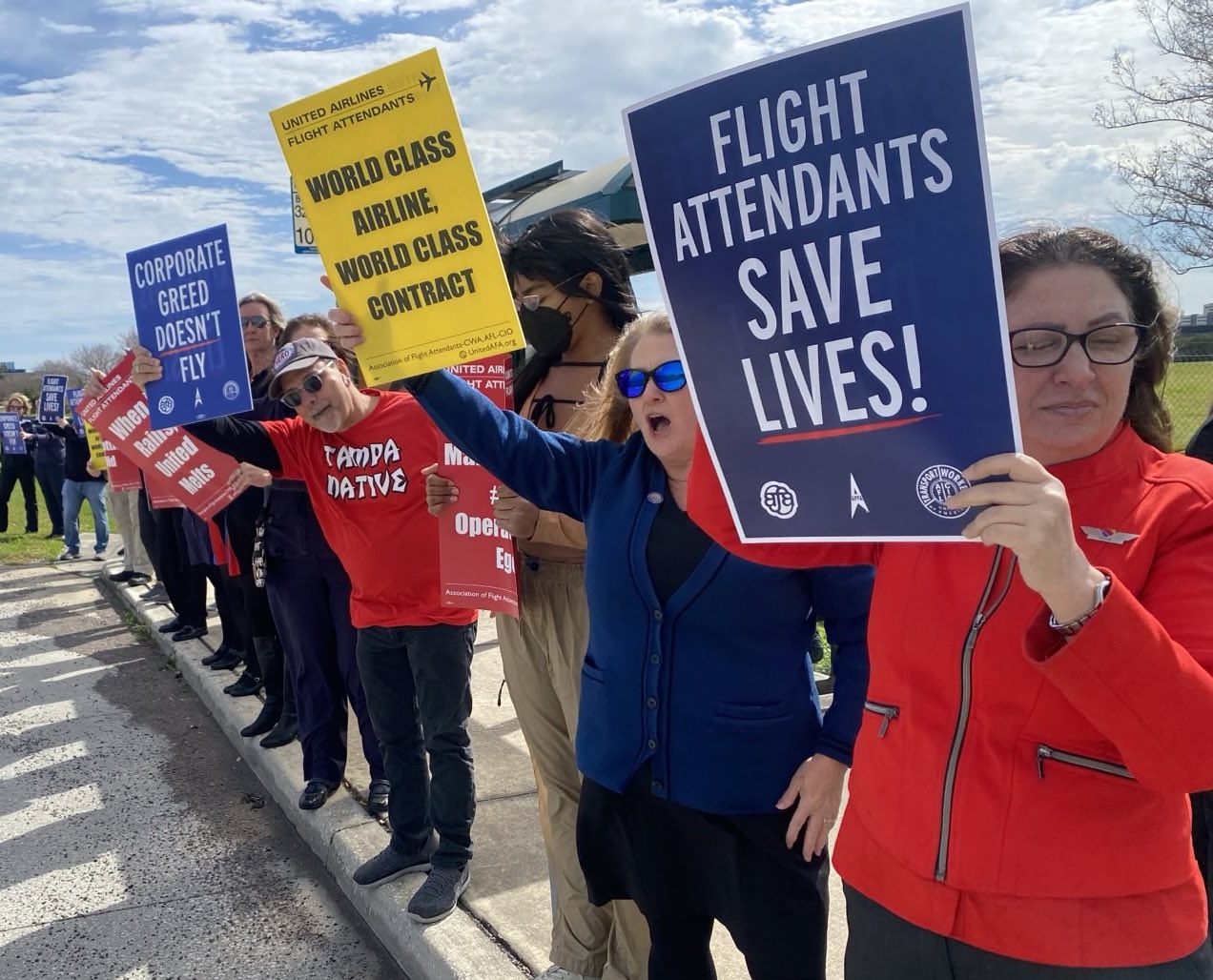
This past year, horrifying accidents and the government shutdown have put many of us on alert about travel risks. It’s made more people reflect on how important flight attendants are. Their primary job, after all, is keeping passengers safe. As the year comes to an end, let’s put a spotlight on some working conditions that affect their own safety.
Physical injuries
Despite gendered stereotypes about being a flight attendant, the job causes serious physical strain. Strain manifests in several parts of the body, most consistently in the shoulders and back. The job requires lifting your own luggage, working aircraft doors (many of which are old and have levers that require lots of muscle to push and pull), and maneuvering beverage carts that can weigh up to 300 pounds. Even stepping out of tall crew vans in heels can be a fall or concussion risk.
Injuries caused by turbulence are also prevalent. Almost every flight experiences some turbulence. Unexpected turbulence occurs frequently, leaving flight attendants no time to safely secure themselves. The National Transportation Safety Board found in 2021 that flight attendants account for 79% of those seriously injured by turbulence (nearly all of the remaining are passengers who were unbelted at the time of injury).
Additionally, a majority of turbulence-related injuries occur below 20,000 feet. The seatbelt light is illuminated at this altitude. But flight attendants have to be up, due to the high demand of service that airlines push for. Despite the Commercial Aviation Safety Team recommending a policy (over 20 years ago) that would have flight attendants seated from takeoff to cruise and from 20,000 feet until landing, no major airline has changed its safety guidelines to fit this.
Sickness and hygiene
One of the most obvious workplace hazards is the fact that the workplace is 30,000 feet in the air, in a pressurized cabin. Flight attendants go through extreme altitude changes every day, sometimes working up to four flights a day. The pressure changes cause pain and long term issues in the sinuses and ears, a problem that every flight attendant must learn to combat. Furthermore, flying with blocked sinuses, which can result from a common cold or just regular congestion, can cause extreme pain, ruptures, bleeding and in the worst cases: hearing loss. In addition to the pressure changes, working around loud planes and engines every day can also cause ear problems and hearing loss. In a 2007 study conducted by the Royal Society for Public Health, it was found that nearly 52% of flight attendants exhibit some sort of hearing loss.
Flight attendants are routinely exposed to hundreds of people in tight, unsanitary conditions. Especially during the wintertime and holiday seasons, flight attendants are prone to catching many different sicknesses just from being around so many people. Cabin dryness can also harm crewmembers’ immunities, since it’s harder to stay hydrated.
Despite this, calling in sick is a challenge. Especially during the six to twelve month probationary period, calling in sick just twice can be a reason for termination. For example, at United Airlines, flight attendants are not able to call in sick without receiving some sort of discipline “points”. Even when accompanied by a doctor's note, a flight attendant will always be disciplined for calling in sick. This unjust system forces flight attendants to work while sick, which causes further damage. Flight attendants have been fighting for better systems for calling out.
Toxic fumes
In September, the Wall Street Journal published an extensive article about toxic fumes that have harmed hundreds of crew members and passengers over 20 years. Fumes are a mix of toxic chemicals that are used in routine airplane procedures (i.e. oil, hydraulic fluid) that occasionally leak into the cabin and flight deck. They can cause illness, and have been an ongoing complaint in many airlines. The Association of Flight Attendants (AFA) offers education to members on how to recognize fumes and respond, but little has been done by airlines to rectify the problem.
An AFA statement on fumes reads: “The first step in change is defining the problem. The industry sought to make victims feel crazy and define unions as hysterical and hyperbolic, but we haven’t backed down.”
Fatigue
According to a report from the International Transport Workers’ Federation (ITF), only 1 in 5 union representatives believe their airline treats fatigue seriously. With inconsistent work schedules and frequent time zone changes, flight attendants commonly experience fatigue. In 2022, the FAA upped the required minimum rest from eight hours to ten hours after flight attendants fought for this. These ten hours are not solely for sleeping, but include passengers deplaning, customs on international flights, and transportation between the airport and the hotel. By the time many flight attendants make it to their overnight hotel, unpack their bags, shower and get ready for bed, it’s almost time for them to wake up for their next duty day. This amount of rest often remains the same even after working 14 or 16 hours, which the FAA allows during maintenance issues or weather.
Another contributing factor to fatigue is the inability to eat proper meals during duty. Flight attendants do not have mandated meal breaks between flights and are expected to find time while flying. The same ITF report shows that three quarters of cabin crew on low-cost carriers do not receive adequate rest breaks. In 2022, after California flight attendants successfully sued Virgin America over this issue, the AFA argued that flight attendants should receive crew rest on long haul flights and be provided meals or compensation for meals. Not getting proper sleep or nutrition can impair cognitive performance and cause flight attendants to make mistakes on the job, sometimes at the risk of their own safety.
Harassment and violence
Flight attendants face routine harassment. Most have stories about uncalled-for behavior: ass grabbing, catcalling, pictures being taken, etc. Some have reported stalking during layovers – think someone showing up to your hotel room.
Almost every flight attendant had seen some kind of unruly behavior. In a 2021 member survey, the AFA found that 17% of respondents reported having had a physical incident with passengers. Their survey cited slurs “too offensive to repeat.” Most receive little to no follow-up on reports to management.
It’s not just passengers. In November, Delta settled a lawsuit with former flight attendant Aryasp Nejat. As reported in the Guardian, the suit accused a uniform inspector of “non-consensual, sexually assaultive touching.” When Nejat posted on social media that this was why his airline needed a union, Delta fired him. Now, they’re paying for him to go to law school.
“One of the reasons that flight attendant unions were originally formed were to root out sexual harassment, assault or sexual exploitation in order to try to get workers to do what you want them to do, to keep them quiet,” said Sara Nelson, president of the AFA.
Mental health
Through all this, flight attendants need to stay prim and proper. That takes it out of you. The National Institute of Health found that the number of flight attendants experiencing depression tripled in 2020. The CDC found that flight attendants have a 50% higher suicide rate than the national average. They go through this while away from friends, family and loved ones.
Unions keep you safe
Some of these workplace hazards may be unavoidable, but company policies can and should be better. Service demands, no-break scheduling, punitive sick policies, handsy managers… the list of preventable issues goes on. The common thread: flight attendants fighting together in a union is the surest cure.
Crew members can plug into AFA campaigns to protect safety on board. These include downloading the 2Hot2Cold app to report extreme cabin temperatures. for identifying and responding to fume events they can access this resource kit.
Various flight attendants contributed to this article.
#Opinion #Commentary #Labor #FightAttendants #WorkplaceSafety #AFACWA #Featured