
Far-right Bolivian government issues arrest for leftist ex-President Evo Morales
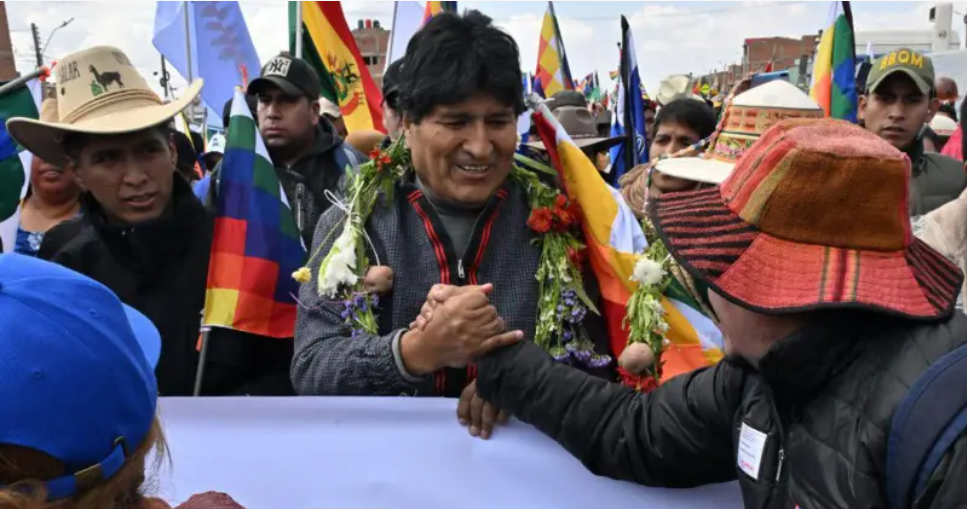
Tucson, AZ – For 53 days, the social movements of indigenous peoples and trade unions blockaded streets across Bolivia to protest the neoliberal agenda of President Rodrigo Paz. Shortly after Paz’s inauguration in November of 2025, unions and community organizations issued economic demands that included stopping the privatization of the nationalized resources of country, reinstating fuel subsidies, and ending tax cuts for the rich.
When Paz refused to meet and dialogue for solutions, the popular forces in the country united for a national strike and blockaded major highways. The movement's escalated tactics brought an escalated demand that President Raz resign immediately. For almost two months, amid heavy repression under the “state of exception” that allowed for detentions and arrests without warrants and state violence, the peoples’ movements held strong.
A longtime indigenous leader from the trade union movement who served as Bolivia’s president from 2006 to 2019, Evo Morales had been protected in his home by indigenous organizations. It was reported that workers took over a nearby airport to prevent state forces, in coordination with present U.S. military advisers, from kidnapping him like they did democratically-elected Nicolás Maduro of Venezuela.
Now, the far-right, pro-U.S. government of Rodrigo Paz is out to get Evo Morales for bogus charges of “armed uprising against the security and sovereignty of the state, terrorism and attacks on the safety of means of transport.”
Other leaders facing this political repression include Juan Carlos Huarachi, a leader from the trade union federation Central Obrera Boliviana (COB), and Freddy Mamani, a professor and leader in an educators’ trade union.