
99 years later: Remembering the Columbine Mine massacre
By Thomas Chaney and Kyle Burroughs
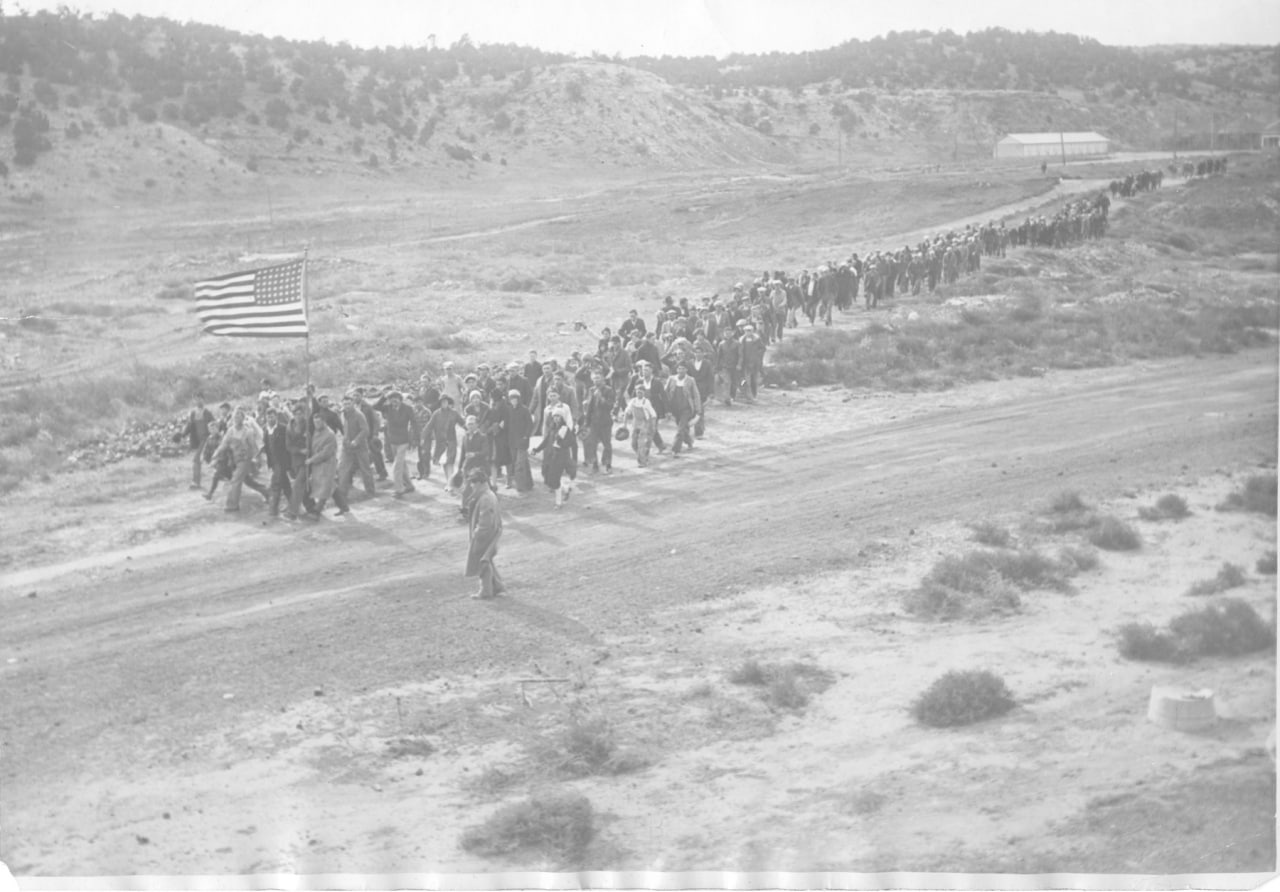
Denver, CO – On November 21, 1927, six striking coal miners were killed in the city of Serene, a now defunct mining town in Colorado. The workers went on strike on October 18, 1927, starting as a walkout to protest the execution of Italian immigrant anarchists Nicola Sacco and Bartolomeo Vanzetti, but ending in a pitched battle for raises and better working conditions against the likes of the Rockefeller dynasty, the Colorado Rangers, and the boss-aligned newspaper.
In what was widely considered to be a miscarriage of justice, Sacco and Vanzetti were sentenced to death in 1921 for an alleged robbery ending in two deaths. Despite weak evidence and a confession from another man, Celestino Madeiros, also executed the same day, Sacco and Vanzetti were subjected to death by the electric chair. The executions set the stage for continued struggle after the Industrial Workers of the World (IWW) called for a three-day walkout in opposition to the punishment.
At the Columbine Mine in Serene, coal miners joined the walkouts, and, with the IWW, began organizing a larger strike around the immediate demands of the workers, which included increased wages and an expansion to the rights of miners.
Author Phyllis Smith, in her book Once A Coal Miner, notes, “Despite its name, dingy little Serene epitomized the conditions the miners were striking against.” Many of the strikers were immigrants, and the media would later excoriate them for their spelling, their speech, and their hygiene; their living conditions in the company town were abhorrent, and they demanded to be treated with dignity.
The strike itself is regarded as one of the most successful in Colorado history; with participation of at least 113 mines; only 12 mines in the state stayed open. The Denver Morning Post reported that, while 1750 miners were working on the 15th day of the strike, almost 8500 had laid down their tools.
Parroting the words of the bosses, newspapers claimed that the miners would be back to work on Monday, and the Denver Morning Post declared at this time that “the backbone of the strike appears to be broken,” even with the reality of the strike numbers on the same page. The strike was, in actuality, unbreakable, supported by the IWW and personalities like “Flaming” Milka Sablich, then 19, but standing steadfast with the strikers as Mother Jones had done at Ludlow 13 years earlier.
The miners in Serene showed some of the strongest organizing skills among the striking workers throughout the state. Despite the hiring of 150 scabs with 50-cent-per-day raises, as well as spying and infiltration from Rockefeller-owned Colorado Fuel and Iron, the workers continued the strike undeterred, engaging the larger community and bringing in their wives and families to bolster the strikes. Miners joined the strike in spite of Colorado’s anti-picketing laws, which, at the time, were utilized as the justification to shut down previous organizing efforts.
The strike was declared illegal through these anti-picketing laws, and, ultimately, 500 picketers at the Columbine Mine were met on the morning of November 21, 1927 by Weld County Sheriffs, the Colorado Rangers, and a group of heavily armed men in plain clothing. Four days earlier, an editorial in The Boulder Daily Camera had declared, “Machine guns are the best answer to the picketers. Machine guns manned by willing shooters are wanted at Colorado Mines.”
After the workers and their wives boldly asserted their right to protest, they were fired upon, which left six dead and more than 60 injured. Eyewitnesses testified that machine guns, rifles, pistols, batons and tear gas were used on the strikers. Over 1000 showed up in Union Square within the week of the massacre to protest the use of force against the miners, and the pressure continued to grow from there.
Strikers continued for another six months until May 1928. The workers went on to win their demands, earning their pay increase with a bonus of a dollar a day. Several mines in Colorado also won union recognition, though not with the IWW, which had preached dual unionism, but with the United Mine Workers, which had remained officially “neutral” throughout the strike activity.
Those killed in the Columbine Mine Massacre are now commemorated in Erie, Colorado, and workers everywhere ought to thank the selflessness and bravery of these heroes who truly embody the spirit of struggle for a better world. The company town of Serene is now a public landfill, but the story of the struggle of working people lives on in this piece of Colorado history.