
Vamos a la Huelga! Emma Tenayuca and the San Antonio Pecan Shellers' Strike
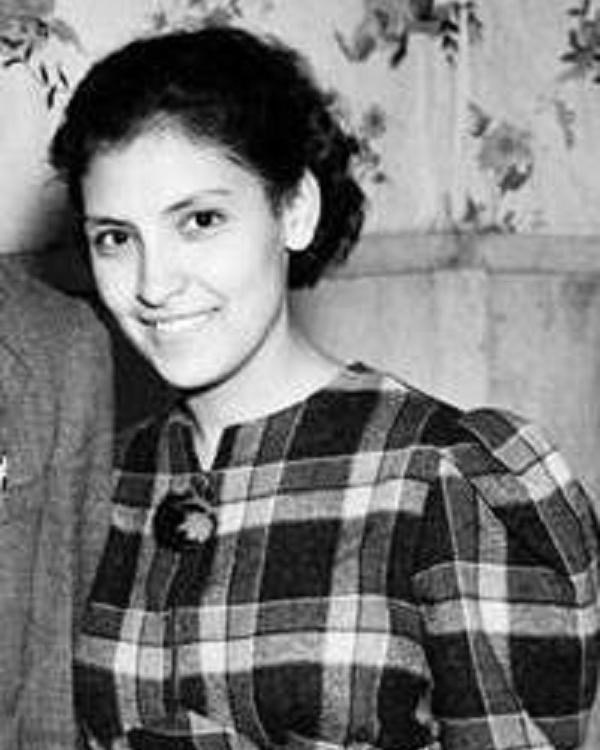
On the evening of January 31, 1938, hundreds of workers crowded into a San Antonio, Texas factory meeting room. Management had just announced a wage cut of up to 30%, a devastating blow to workers who were already among the lowest-paid in the United States. The atmosphere was tense and uncertain. Then a young Chicana organizer, Manuela Solis Sagar, climbed onto a table and cut through the hesitation: “Well, what are we going to do? Are you going to sit there, or are we going to strike?”
The answer came back in a roar, “Vamos a la huelga!” Within hours the decision was made. By the next morning, thousands of pecan shellers across San Antonio had walked off the job. The barrios of the city's West Side erupted into mass demonstrations as workers took to the streets in a militant display of workers’ power. What followed was nearly two months of struggle against the bosses, against the police, and against the city's corrupt political machine that would shake San Antonio to its foundations.
A city built on exploitation
To understand the eruption of 1938, it is necessary to understand what life was like on San Antonio's West Side. Between 1910 and 1930, the Mexican population in Texas more than tripled, driven north by the upheavals of the Mexican Revolution and the displacement of peasants and small landholders by large-scale commercial agriculture on both sides of the border. These workers arrived in San Antonio systematically excluded from most trades and industries, funneled into the most grueling and lowest-paid work available, including pecan shelling.
By the late 1930s, the West Side resembled one of the most impoverished urban districts in the country. Families of eight or ten were crowded into two-room shacks without running water or electricity, renting for as little as one dollar a week. The pecan shelling plants themselves were overcrowded and unventilated; state health inspectors described filthy floors, broken containers, and no soap or towels. Workers were paid by the pound, just five or six cents per pound shelled, with a WPA survey finding average weekly wages of $2.73.
Julius Seligsman, the “Pecan King” whose operations supplied half the country's pecans and who reportedly paid himself a salary of $1000 a week, testified before a federal hearing that “The Mexican pecan shellers eat a good many pecans, and five cents a day is enough to support them in addition to what they eat while they work.” Respiratory illnesses, particularly tuberculosis spread by the ever-present pecan dust was rampant. Many workers brought shelling home with them in the evenings, enlisting their children to try to earn a few extra cents.
La Pasionaria: Emma Tenayuca and the Workers Alliance
“I was arrested a number of times; I never thought in terms of fear, I thought in terms of justice.” – Emma Tenayuca
The 1938 strike was the culmination of years of labor struggle and militant organizing amongst San Antonio's working class. At the center of that organizing was a young Chicana communist organizer named Emma Tenayuca.
Tenayuca had first emerged as an organizer in 1934, while still in high school, participating in strike support activities at the Fink Cigar Company, one of the low-wage, labor-intensive industries that relied heavily on young Chicana women. She was arrested at 16, the first of many times. She soon became an organizer with the Communist Party-led Unemployed Council, and helped to lead a series of struggles, supporting striking garment workers, demanding public relief for unemployed families, and defending immigrant workers threatened with deportation and repatriation. She built a reputation as an uncompromising advocate for the West Side's working class, earning her the moniker of “La Pasionaria.”
The organizational vehicle for this work was the Workers Alliance. The Workers Alliance was a national mass organization of the Communist Party. In San Antonio, the CPUSA and the Workers Alliance organized for WPA jobs and federal relief, and crucially, fought the systemic discrimination that locked Mexican Americans out of national relief programs.
As early as 1930, the local Communist Party and the Unemployed Council had organized a march of the unemployed drawing over 1000 participants, the majority of whom were of Mexican origin. Under Tenayuca's leadership, the San Antonio chapter became one of the most active in the country, staging sit-ins at City Hall, organizing mass demonstrations, confronting immigration repression, and building a network of chapters rooted in the barrios of the West Side. Through this work, the Workers Alliance elevated Tenayuca to its national executive committee, placing the young Chicana communist in the leadership of a national mass organization
In addition to her labor work, Tenayuca also made significant theoretical contributions in applying the National Question to Chicanos in the Southwest. In her 1939 article titled “The Mexican Question in the Southwest” she advanced the idea that Mexicans in the United States represented an oppressed nationality, stating that “the status of the Mexican people as an oppressed national group may be compared in a number of respects with that of the Negro today.” While she stopped short of calling for self-determination of the Chicano Nation, her analysis of Chicanos as an oppressed nationality earned her a place as one of the earliest revolutionary theoreticians of the Chicano National question.
The strike: Class war in the open
The walkout on January 31 was spontaneous. The local union leadership vacillated and opposed launching such a large-scale strike. But the workers moved anyway, and they moved toward their most trusted militant leaders. Tenayuca, alongside fellow communist organizers like Manuela Solis Sagar, helped transform the spontaneous walkout into coordinated action. Over 10,000 workers ultimately joined the strike, affiliated with Pecan Workers Local 172 of the CIO affiliated UCAPAWA (United Cannery, Agricultural, Packing, and Allied Workers of America). What had begun as a response to a wage cut became a social rebellion of the Chicano working class.
The city’s ruling class responded with force. Within a day of the walkout, police arrested several strike leaders, including Tenayuca and her husband Homer Brooks, both known Communist Party members. San Antonio Police Chief Owen Kilday openly justified the crackdown, declaring to the press that he “would not permit the reds to take part in the strike.” San Antonio elites maintained that the strike was an attempt to place the entire west side of San Antonio “under the red banner.”
The workers' response was equally forceful. Hundreds marched on the police station demanding Tenayuca's release. When she emerged from jail the next day, the workers elected San Antonio's most prominent communist organizer honorary strike captain by acclamation.
What followed was weeks of intensifying repression. Chief Kilday deployed over 250 police officers and firemen into the West Side, using tear gas, beatings, and mass arrest against picketers. Workers were charged with blocking sidewalks, loitering and disturbing the peace. The city jail, which critics took to calling the “black hole” of Texas, held over 1000 strikers over the course of the strike, some as young as 14. Inside the cells, workers were hosed down with cold water to break their spirits.
Organizers adapted. When picket lines were broken up for loitering, they devised rolling pickets, coordinated groups moving from plant to plant. When police targeted public property, they picketed from private lots adjacent to the factories, with the permission of homeowners.
All the forces of reaction in San Antonio united in an effort to crush the threat of the strike. The city's corrupt health department shut down CIO soup kitchens on spurious sanitary grounds. The archdiocese issued a statement defending the police beatings and condemning the strike leadership as communist. The Mexican Chamber of Commerce and the local LULAC chapter—representatives of the Mexican American aspiring petty bourgeoisie also joined in the smear campaign against the workers' movement.
Under pressure from the national CIO leadership, Tenayuca stepped back from the public face of the strike; the constant red-baiting had become a strategic liability. But in reality, she continued to run the operation: writing circulars and coordinating picket lines.
Victory, reversal, and legacy
Hearings sought by UCAPAWA president Donald Henderson before the Texas Industrial Commission gave workers a platform to testify publicly to the abuse they had endured. 14-year-old Dora Enriquez testified that she had been arrested and threatened if she returned to the picket line. 45-year-old Refugia Garcia testified that Chief Kilday had personally threatened to “split my head wide open.” The commission ultimately found that the civil rights of the striking workers had been fundamentally violated, though with no enforcement mechanism, Kilday and the bosses continued their campaign of terror.
Texas Governor James Allred eventually pushed both sides toward arbitration. On March 8, after nearly six weeks on strike, the pecan shellers returned to work pending a formal settlement. The arbitration board awarded formal union recognition and a wage increase to five-and-a-half cents per pound for pieces and six cents for halves. It was a real, if partial, victory: workers had forced the state and the bosses to respond to their demands and won.
The victory would be short-lived. The pecan operators mechanized their operations. Julius Seligsman shuttered his plants and reopened with a fraction of the workforce. Many of the workers who had fought so hard found themselves unemployed once more.
But the strike still left an enduring legacy in San Antonio and beyond. For nearly two months, over 10,000 of the most exploited workers in the country, overwhelmingly Chicana women, earning less than three dollars a week, had organized, resisted and fought back. They demonstrated that even under conditions of national oppression, violent repression and economic exploitation, the working class could fight their employers and win. That capacity had not developed spontaneously, but had been carefully built, year by year, through the patient organizing of the Workers Alliance and the militant minority of communists and labor leaders like Emma Tenayuca who led the workers in the struggle.
Today, the San Antonio pecan shellers’ strike remains a powerful reminder that the working class has never won anything without militant struggle. Faced with starvation wages, racist repression, police violence, and red-baiting, thousands of Chicano workers still organized and fought back. Their struggle shows us that militant organization, class solidarity, and communist leadership can transform workers economic grievances into collective power. At a time when workers across the country continue to face exploitation, union busting, and attacks on immigrants, the legacy of Emma Tenayuca and the pecan shellers remains not just a piece of history, but an example to follow.