
Review: A valentine from revolutionary Alexandra Kollontai
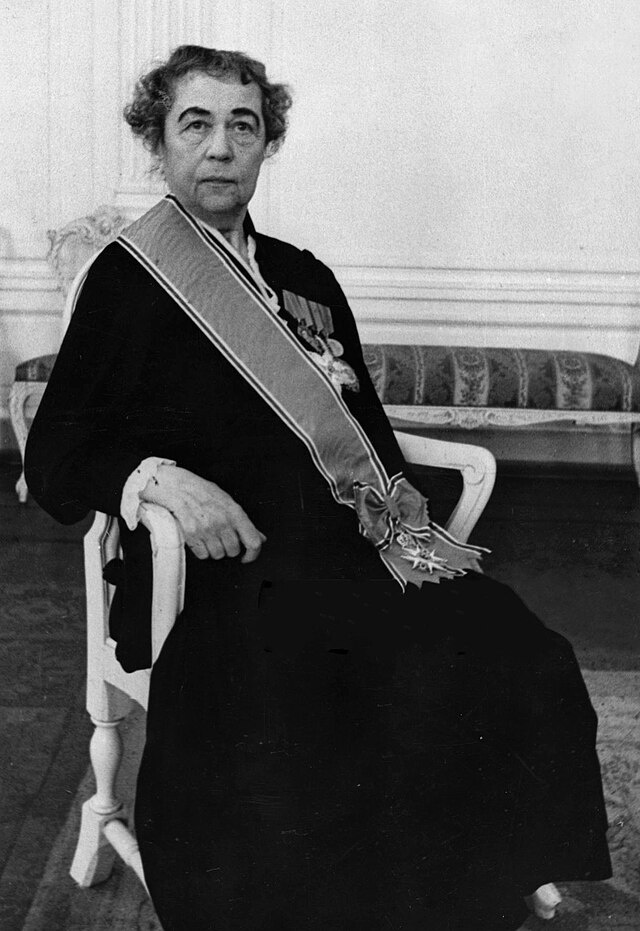
In Sexual Relations and the Class Struggle, the Soviet revolutionary Alexandra Kollontai wrote: “Throughout the long journey of human history, you probably won’t find a time when the problems of sex have occupied such a central place in the life of society.”
These were opening lines, written 105 years ago, to a message of undying love for the working class. In this pamphlet, Kollontai sketched out how capitalism perverts our relationships. It restricts the deep personal connections that we long for. To truly change our hearts, she said, we need to change the system. And we change it in the passion and solidarity of class struggle.
Many of the contradictions of Kollontai’s time continue today in new forms. The right wing demands that we follow patriarchal gender norms. At the same time, capitalist exploitation tears apart the financial stability and emotional bonds of family life. Kollontai teaches us how to avoid errors about this situation, and how this tension helps prepare the terrain for revolution.
Kollontai’s context
When she wrote, the people of the former Russian empire were waging a civil war against supporters of the tsar, backed by Britain, the U.S., and other imperialists. The people were defending the first socialist republic. They were in a mainly agricultural country, with some industrial cities. For decades before, factory workers toiled under brutal conditions. Peasants suffered the terror of landlords. During World War I, as men went off, women took their place in the factories and the fields. In 1917, some of these same women workers in Petrograd went on strike against the war and kicked off a year of revolution. They marched under the banners of “A people’s peace” and “Down with the tsar!” During the Russian Civil War, over 50,000 women joined the Red Army.
From the smoldering battlefield, the women’s movement bloomed. This movement brought with it a new view of family relations. Kollontai organized the first congress of working and peasant women in 1918. That same year, the new Soviet government decriminalized homosexuality, liberalized divorce, and allowed cohabitation outside marriage. In 1919, the Communist Party established its Women’s Section, with Kollontai in charge. In 1920, what was once a semi-feudal monarchy became the first country to legalize abortion.
“Sexual crisis” permeates the masses
The new socialist society was putting patriarchy and gender norms on trial. This is because it had gone through a sexual crisis stoked by decades of capitalism. By “sexual crisis,” Kollontai meant a widespread breakdown in the traditional family structure.
The capitalist sexual crisis permeates all of the masses. “It spreads from the palaces and mansions to the crowded quarters of the working class, looks in on the peaceful dwelling places of the petty-bourgeoisie, and makes its way into the heart of the countryside,” wrote Kollontai. “To imagine that only the members of the well-off sections of society are floundering and in the throes of these problems would be to make a grave mistake.”
Kollontai gives the lie to those who say that being gay or trans is a middle class thing, or a white thing. Neither can feminism be the property of rich women. The decline of the patriarchal family spares no class or nationality.
Material basis of the sexual crisis
The causes of the crisis, she says, are three-quarters economic, one-quarter psychological.
On the economic level, capitalism puts two contradictory forces into motion. On the one hand, it clings to the patriarchal and monogamous family. This is how it passes down property from one generation to the next. It is also how it maintains or grows the size of the workforce. On the other hand, the thirst for profit bleeds working families dry. Having one breadwinner is unsustainable for the working class.
On the psychological level, capitalism promotes unhealthy ideas about relationships, rooted in patriarchal gender norms. These include individualism, or thinking as if we are completely self-made and self-sufficient. This leads to loneliness, which the worker wants to fix with a “soulmate” to solve all their problems. Closely related is possessiveness. As Kollontai puts it: “The claims we make on our ‘contracted partner’ are absolute and undivided. We are unable to follow the simplest rule of love – that another person should be treated with great consideration.” The last factor that Kollontai identifies is women’s material inequality. This leads to chauvinist attitudes and double standards for the emotional and sexual rights women and men have on each other.
To get a taste of these economic and psychological aspects, think about how often we hear “I’m going through her/his/their phone.” Bourgeois possessiveness makes partners feel entitled to every one of the other’s conversations. Women’s inequality puts them in a position of dependence that often gives them no choice but to be on guard about cheating. This doesn’t stop at couples. How heartbreaking is it for an intolerant parent to spy on a closeted LGBTQ child?
From the bank account to the bedroom, capitalism wants us to base our lives around the traditional family. Yet it exploits our livelihoods and warps our minds. If we want to explain domestic violence, sexual assault, divorce rates, children’s estrangement, and LGBTQ homelessness, we need look no further than capitalism’s sexual crisis.
Scattered and unsystematic adaptations
Kollontai then explains: “The destructive influence of capitalism destroys the basis of the worker’s family and forces him unconsciously to ‘adapt’ to the existing conditions.”
To cope, workers adjust their lifestyles. They marry later to afford families. When they can’t afford them, they need abortion and birth control. They turn to prostitution, on one side to put food on the plate, on the other to escape loneliness or experience possession.
Workers’ adaptations are not immediately progressive; they’re a sign of strain. The thorns of the traditional family structure don’t mean that capitalism breaks it down in a good way. We should defend families left out in the cold, for example by fighting deportations.
The rise of LGBTQ and nontraditional relationships is another feature of the sexual crisis, and many make an effort to overcome the capitalist mindset. But Kollontai rejects the thought that new forms of relationships cleanse our hands by themselves. Today, we often see the misconception that some people are revolutionary just because they are queer, open, etc. “The sexual crisis will in no way be reduced whatever kind of marriage or personal relationships people care to try,” she warns.
But the working class’s adaptations are signs that sexist gender norms have rotted to their core.
The working class task: a labor of love
Kollontai sees that the sexual crisis marks at once the death throes of an old society and the birth pangs of a new. “It destroys the monogamous-property-oriented family. On the other hand, a greater fluidity in relationships between the sexes coincides with, and is even the indirect result of one of the basic tasks of the working class.”
The crisis unsettles capitalism and burns with desire for a different order. The working class’s search for love based on true friendship dovetails its struggle for emancipation.
Kollontai makes a comparison to illustrate. Picture, she says, a struggling business owner who takes from his company to bail out his family. “The family comes first,” he will say, and his fellow business owners will agree. In doing so, he undermines his class status.
Now, think of workers on strike. If one crosses the picket line and says it’s to support a family, the picketers will make clear: “The class comes first.” The others on the line also have families, but they know that they can only care for them through solidarity with their coworkers. Their families know it too. The whole class rises together.
Many who’ve lost a relative to police crimes understand. They seek justice for their family, but they know that to get it they have to raise their struggle to a higher level. They fight for all families who suffer from police terror.
Relations of solidarity rise above those of individualism, possession and chauvinism. Think of a woman who shouts back when a passing car harasses her girlfriend. Who wouldn’t envy her love? Think of a boy who stands up to a bully on the playground. What playmate wouldn’t want his friendship? Think of a mother who speaks up to a greedy school board. Who wouldn’t say her kids were lucky for her care?
Kollontai is showing that new relationships are not only possible, they are powerful. The working class learns to form true connections in the struggle. It will need love to change the system, and it’ll need to change the system to properly love. Cupid stands for nothing unarmed. He works only by using his arrows.
Sexual Relations and the Class Struggle can be found at this link.
Serena Sojic-Borne is a member of the Freedom Road Socialist Organization LGBTQ and Women’s Movement Work Team.
#RevolutionaryTheory #Kollontai #WomensMovement #LGBTQ #ValentinesDay